
Survey and camera positions
Review entrances, corridors, outdoor areas, blind spots and the purpose of each camera before cabling begins.
We review entrances, blind spots, lighting and viewing distance first, then select camera types, lenses, recorder capacity, storage and mobile viewing before cabling begins.
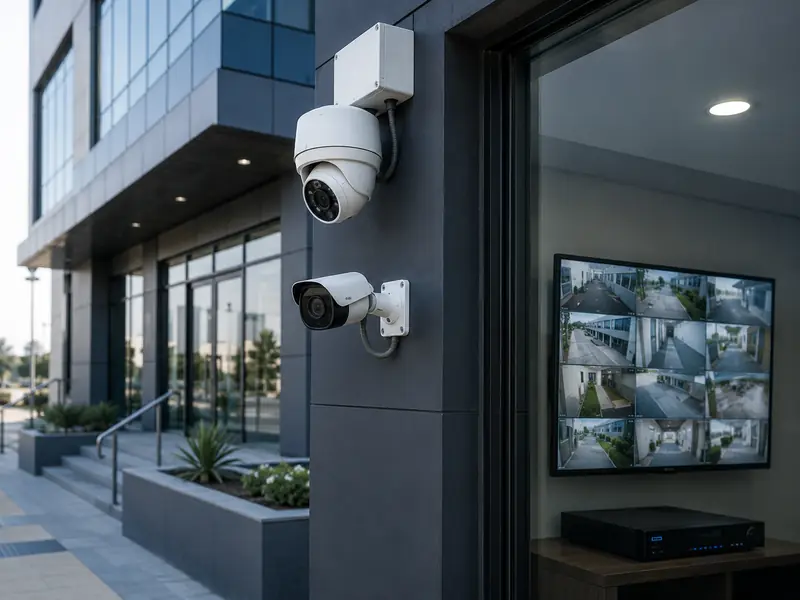 CCTV · IP · NVR
Camera count does not start with a fixed number. It starts with what you actually need to see and record.
Count, resolution, lens and storage follow the purpose of each viewing point. More megapixels cannot fix a poor angle, and more cameras cannot replace proper coverage planning.
We treat CCTV as a complete system: useful image detail, recording that can be retrieved, stable networking where required and organized viewing accounts.
Review entrances, corridors, outdoor areas, blind spots and the purpose of each camera before cabling begins.
Choose IP or HD, indoor or outdoor, fixed or PTZ, plus resolution, lens and night imaging based on the scene.
Run organized routes and install cameras with suitable height, angle and protection for the site conditions.
Select the right NVR or DVR and calculate drives around camera count, resolution and required retention days.
Configure supported apps, accounts, permissions and network settings for remote viewing or management.
Verify live view, recording, playback, time and mobile viewing, then explain the basic operating steps.
Scene, distance, lighting, cabling and retention requirements matter more than megapixel count alone.
| Need | What we review | Technical decision |
|---|---|---|
| Identify people at an entrance | Viewing distance, lighting and mounting height | Lens, angle and resolution selected for the entrance instead of a very wide but weak view. |
| Cover a wide area | Scene width and blind spots | Planned camera placement or a suitable camera type instead of relying on one position. |
| Record for several days | Camera count, resolution and recording profile | Storage is calculated before choosing drives and the recorder. |
| View from outside the site | Internet, network and user accounts | Supported remote access with appropriate accounts and permissions. |
Resolution cannot compensate for the wrong lens, poor angle or difficult lighting.
Footage can be overwritten earlier than expected if capacity is not calculated around the actual settings.
Organized user accounts and permissions are better than one shared account for everyone.
Live view is not enough; recording, search and playback should be verified before handover.
Identify critical areas, angles, distances, lighting and existing cabling.
Select camera types, lenses, recorder, storage and required network architecture.
Complete cabling and install cameras, recorder and network equipment within project scope.
Set time, recording, accounts and mobile viewing where supported.
Test live view, recording, playback and remote access, then explain basic operation.
The choice depends on site size, existing cabling, required image quality and future expansion. IP cameras are well suited to network integration and scalable systems, while HD systems can be practical when existing coaxial cabling can be reused.
Storage depends on camera count, resolution, frame rate, compression and the number of retention days required. We calculate storage before selecting the recorder and drives.
Yes. Remote viewing can be configured through the supported mobile application when suitable internet connectivity is available, with accounts, passwords and network settings configured securely.
Night performance depends on camera type, available lighting, distance and imaging technology such as infrared or color night imaging.
Camera count is determined after reviewing entrances, exits, corridors, sensitive areas, blind spots and lens distances to achieve practical coverage without unnecessary cameras.
Send the site type, approximate size or photos of entrances and important areas, and we will identify what should be surveyed before selecting cameras, recording and storage.